
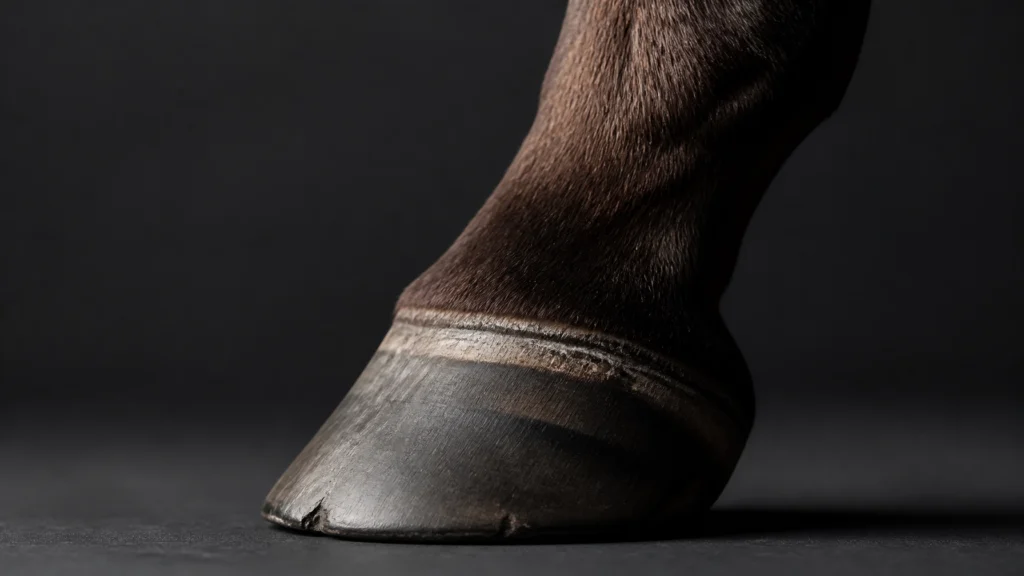
Laminitis is one of the most critical conditions a horse owner may face, characterized by the painful inflammation of the sensitive laminae within the hoof. Because the condition can progress rapidly from subtle discomfort to permanent structural damage, recognizing early horse laminitis symptoms is vital for a positive prognosis.
At LightWave Equine Therapy, we specialize in advanced, non-invasive support for horses navigating these challenges. By understanding the physiological shifts that occur before a full-blown episode, you can intervene sooner, potentially saving your horse from the severe consequences of the acute phase.
Understanding the Physiological Process of Laminitis
To identify symptoms effectively, it is helpful to understand what is happening beneath the hoof wall. Laminitis is essentially a failure of the “velcro-like” connection between the hoof wall and the coffin bone (pedal bone). When this connection is compromised by inflammation, the bone can rotate or sink: a process that is often irreversible.
We categorize the progression into four primary stages:
- Subclinical (Developmental): Changes are occurring at a cellular level, but the horse is not yet visibly lame.
- Acute: The sudden onset of severe pain and clinical lameness.
- Subacute: A milder form where laminar damage is limited, often allowing for a full recovery if managed correctly.
- Chronic: Structural failure has occurred, leading to long-term hoof changes and recurring pain.
Our goal in managing laminitis is to address the inflammation during the earliest possible stage to prevent the transition into chronic structural failure.
The Subtle Early Warning Signs
The “subclinical” phase is the most critical window for intervention. During this time, the horse may show signs that are easily dismissed as general grumpiness or minor stiffness.
Persistent Hoof Heat
While it is normal for hooves to fluctuate in temperature based on exercise or ambient weather, hooves that remain hot for more than two hours: especially in cool weather: are a significant red flag. We recommend checking hoof temperature daily to establish a baseline for what is “normal” for your horse.
The Bounding Digital Pulse
A “bounding” digital pulse is perhaps the most reliable early indicator of equine hoof care issues. In a healthy horse, the pulse at the back of the pastern is faint and difficult to find. When inflammation is present, the pulse becomes strong and throbbing. Regularly palpating the digital artery allows you to detect these changes 24 to 48 hours before lameness occurs.
Changes in Stance and Movement
Before a horse adopts the classic “sawhorse” stance, they may begin shifting weight more frequently than usual. You might notice your horse:
- Reluctance to turn in tight circles.
- A shortened, choppy stride (“foot-soreness”).
- Frequent shifting of weight between the front feet while standing.
- Hesitation when moving from soft grass to hard surfaces like concrete or gravel.

Recognizing Acute Symptoms: The Clinical Emergency
If the subclinical signs are missed, the condition progresses into the acute phase. This is a medical emergency that requires immediate veterinary intervention.
The Sawhorse Stance
In an attempt to relieve pressure on the painful toes, horses will often stretch their front legs forward and tuck their hind legs underneath their body. This “rocking back” posture is a hallmark of acute laminitis.
Physiological Stress Indicators
Pain from laminitis is intense and triggers a systemic stress response. We often observe an increased heart rate (above the normal 30–40 bpm) and elevated respiratory rates. In some cases, horses may even exhibit colic-like behaviors, such as looking at their flanks or sweating, due to the severity of the pain.
Reluctance to Move
A horse in the acute phase may be completely unwilling to walk or turn. When forced to move, they may walk on their heels, creating a stilted, mechanical gait. This is often accompanied by a glazed or pained facial expression and pinned ears.
Monitoring Long-Term Hoof Health
For owners treating laminitis in ponies or horses with chronic conditions, ongoing monitoring of the hoof structure is essential. Chronic cases often exhibit:
- Divergent growth rings: Hoof rings that are wider at the heel than at the toe.
- Widened white line: A “stretched” appearance at the sole-hoof wall junction.
- Dished hoof wall: A concave appearance to the front of the hoof wall, indicating internal rotation.
Consistent equine hoof care involving a skilled farrier and regular veterinary assessments is the foundation of long-term stability.
Supporting Recovery with Advanced Light Therapy
While traditional management focuses on diet, farriery, and anti-inflammatories, we provide a complementary approach through pulsed-light therapy for horses. Our system uses targeted, non-invasive light energy to support the body’s natural healing mechanisms.
The Mechanism of Action
Red light therapy for horses (specifically pulsed-light therapy) works through a process called photobiomodulation. The light photons are absorbed by the mitochondria in the cells, which:
- Increases ATP Production: Providing the cellular energy needed for tissue repair.
- Reduces Inflammation: Decreasing the activity of pro-inflammatory cytokines and reducing edema (swelling) within the confined space of the hoof.
- Improves Microcirculation: Enhancing blood flow to the damaged laminae to clear inflammatory debris and deliver nutrients.
Our treatment is completely drug-free and stress-free for the horse. The applicator is held gently against the hoof or specific acupoints, making it an ideal equine therapy for inflammation that does not require sedation or invasive procedures.

A Holistic Approach to Management
Treating laminitis requires a multi-faceted strategy. Our practitioners work alongside your existing veterinary and farriery team to ensure a cohesive care plan. By integrating light therapy for laminitis, we aim to manage pain and inflammation naturally, supporting the horse’s comfort during the recovery phase.
We have seen through various case studies that early intervention combined with advanced technology can significantly impact the quality of life for horses prone to this debilitating condition.

Take the Next Step in Your Horse’s Health
Recognizing the symptoms is only the first step. If you are concerned about your horse’s hoof health or are looking for a non-invasive way to support their recovery from laminitis, we are here to help. Our trained practitioners deliver specialized care directly to your yard, ensuring your horse remains in a familiar, low-stress environment.
Are you concerned about your horse’s hoof health?
Fill out our contact form to speak with a practitioner or to learn more about how our pulsed-light therapy can support your horse’s recovery.