When a horse is diagnosed with laminitis, the immediate priority for any owner or equine professional is the management of pain and the reduction of inflammation within the delicate laminae of the hoof. For decades, the standard response has been the administration of non-steroidal anti-inflammatory drugs (NSAIDs). While these medications are a cornerstone of acute care, the equine industry is increasingly looking toward advanced, non-invasive technologies to support long-term recovery and metabolic health.
At LightWave Equine Therapy, we advocate for an evidence-based approach that combines traditional veterinary expertise with the physiological benefits of pulsed-light therapy. The question is not necessarily whether red light therapy is "better" than traditional meds, but rather how these two distinct modalities function and where a drug-free, non-invasive alternative provides the most significant advantage for the horse’s long-term well-being.
The Role of Traditional Medications (NSAIDs)
Traditional pharmacological intervention for laminitis typically involves the use of NSAIDs such as Phenylbutazone ("Bute"), Flunixin Meglumine, or Firocoxib. These drugs work by inhibiting the cyclo-oxygenase (COX) enzymes, which in turn reduces the production of prostaglandins, the chemicals responsible for signaling pain and promoting inflammation.
In an acute laminitic episode, the rapid suppression of inflammation is vital. NSAIDs are highly effective at providing systemic relief, allowing the horse to remain more comfortable during the initial inflammatory "storm." However, the systemic nature of these drugs is also their primary drawback. Because they circulate through the entire body, they can affect organs far removed from the site of the hoof injury.
Extended or high-dose use of NSAIDs is associated with several clinical risks, including:
- Gastric and Colonic Ulceration: Disruption of the protective lining of the digestive tract.
- Renal Compromise: Potential damage to the kidneys, particularly in horses that may be dehydrated or have underlying metabolic issues.
- Right Dorsal Colitis: A specific and serious form of inflammation in the large colon.
For many owners, the challenge lies in managing a chronic condition where the "masking" of pain with medication may inadvertently lead to further structural damage if the horse becomes too active before the laminae have sufficiently healed.
The Science of Red Light Therapy: Photobiomodulation
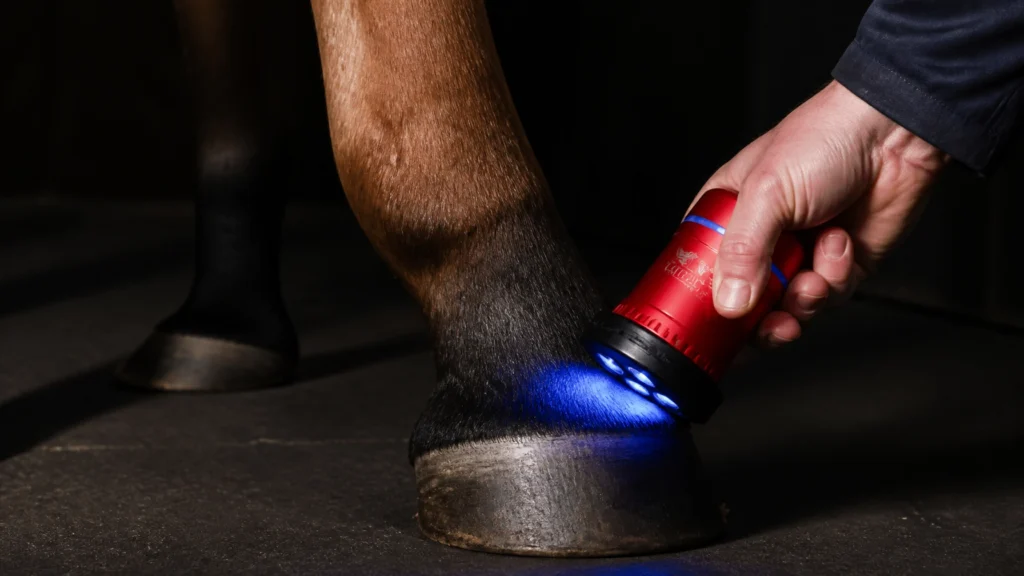
Red light therapy, or photobiomodulation (PBM), operates on a fundamentally different physiological level. Rather than chemically blocking pain signals throughout the body, our pulsed-light therapy delivers targeted photons of light energy directly to the compromised tissues of the hoof and lower limb.
When these specific wavelengths are absorbed by the mitochondria within the horse’s cells, a process called cellular respiration is enhanced. This leads to an increase in the production of Adenosine Triphosphate (ATP), which is essentially the fuel cells require for repair and regeneration.

By focusing on how LightWave therapy works, we can see that the primary benefits are localized and regenerative:
- Vasodilation and Circulation: The therapy promotes the release of nitric oxide, which dilates blood vessels and improves microcirculation within the hoof. This is critical in laminitis, where blood flow is often severely compromised.
- Reduction of Oxidative Stress: By modulating the inflammatory response at a cellular level, light therapy helps reduce the presence of pro-inflammatory cytokines without the systemic risks associated with drugs.
- Collagen Synthesis: The treatment stimulates fibroblast activity, supporting the structural integrity of the connective tissues that hold the pedal bone in place.
Comparing the Two: A Detailed Breakdown
When we compare these two approaches, we are looking at the difference between systemic suppression and localized stimulation.
| Feature | Traditional NSAIDs | LightWave Red Light Therapy |
|---|---|---|
| Administration | Oral or Injectable (Systemic) | Targeted Handheld Applicator (Local) |
| Primary Mechanism | Chemical enzyme inhibition | Photobiomodulation (Cellular ATP boost) |
| Side Effects | Risk of ulcers, renal issues | None (Drug-free and non-invasive) |
| Stress Level | Can be difficult to dose | Highly relaxing and non-invasive |
| Target | General pain relief | Targeted tissue repair and circulation |
| Role | Acute crisis management | Recovery and long-term support |
Our therapy is delivered by trained practitioners who understand the delicate anatomy of the laminitic hoof. Unlike medication, which requires the horse’s metabolic system to process and excrete chemicals, light therapy leaves no residue and places no burden on the liver or kidneys. This makes it an ideal solution for horses with Equine Metabolic Syndrome (EMS) or Pituitary Pars Intermedia Dysfunction (PPID), who may already be metabolically fragile.
The Power of Complementary Care
It is important to emphasize that we do not view red light therapy as a replacement for veterinary diagnosis or initial emergency medication. Instead, we see it as a powerful complementary support system. In many cases, the integration of LightWave therapy allows for a more tapered approach to medication.
By improving the horse’s comfort through natural cellular repair and increased circulation, owners often find that the requirement for long-term NSAID use is reduced. This "multimodal" approach ensures that the horse receives the immediate benefits of pain relief while the underlying tissue damage is addressed through light energy.

Furthermore, our treatments are designed to be entirely stress-free. There are no needles, no forced immobilization, and no bitter pastes to administer. Most horses find the sessions deeply relaxing, which is a significant factor in recovery. Stress produces cortisol, which can further exacerbate metabolic issues and hinder the healing process. By maintaining a calm environment, we support the horse's parasympathetic nervous system, allowing the body to focus entirely on repair.
Precision and Safety in Application
Safety is paramount when dealing with laminitis. While some over-the-counter red light devices exist, the efficacy of the treatment depends heavily on the power output, the specific wavelengths used, and the precision of the application.
Our practitioners use medical-grade equipment specifically calibrated for equine tissue. This ensures that the light energy reaches the deeper structures of the hoof where it is needed most. We work alongside your existing farriery and veterinary team to ensure that our sessions coincide with the overall management plan for your horse. We have seen through various case studies that a consistent, targeted approach to light therapy can significantly improve the quality of the hoof horn and the overall mobility of the horse during the rehabilitation phase.
Moving Toward a Drug-Free Future
The transition from acute inflammation to long-term soundness is often a long and difficult road for both the horse and the owner. While traditional medications serve a vital purpose in the short term, they are rarely a sustainable solution for the lifetime management of a laminitis-prone horse.
By incorporating pulsed-light therapy, we offer a path that prioritizes the horse’s natural physiological recovery. We are committed to providing a service that is not only effective but also respects the biological integrity of the animal.

If you are looking for a way to support your horse’s recovery from laminitis without the constant reliance on pharmaceuticals, we invite you to explore how our advanced light therapy can be integrated into your care routine. Our goal is to provide a safe, effective, and professional alternative that helps your horse return to comfort and health.
Take the Next Step in Your Horse’s Recovery
We understand that every laminitis case is unique and requires a tailored approach. Whether your horse is in the early stages of recovery or you are managing a chronic condition, our trained practitioners are here to help.
To learn more about our services or to book a consultation, please fill out the form below or contact us directly via our contact page. Let us work together to provide your horse with the advanced, drug-free support they deserve.